EXPERIMENTS
His work is driven by a constant search for new forms of mutation within tattooing,
rejecting the digital as a dominant language and returning to error, noise, and the physical.
There is no simulation here — only contact, pressure, and wear.
Everything emerges from analog processes,
where texture is not illustrated, but revealed.
Where the image is not controlled, but contaminated.
Tools stop being precise and become organic.
Mistakes are not corrected — they are absorbed.
Distortion is not a flaw — it is the result.
Each piece is a conscious wound,
a real transformation of the skin,
far from the clean, lifeless perfection of the digital.
LONG LIVE THE OLD FLESH
Here is a selection of some of these processes.
❌ RORSCHACH CIRCUIT ❌
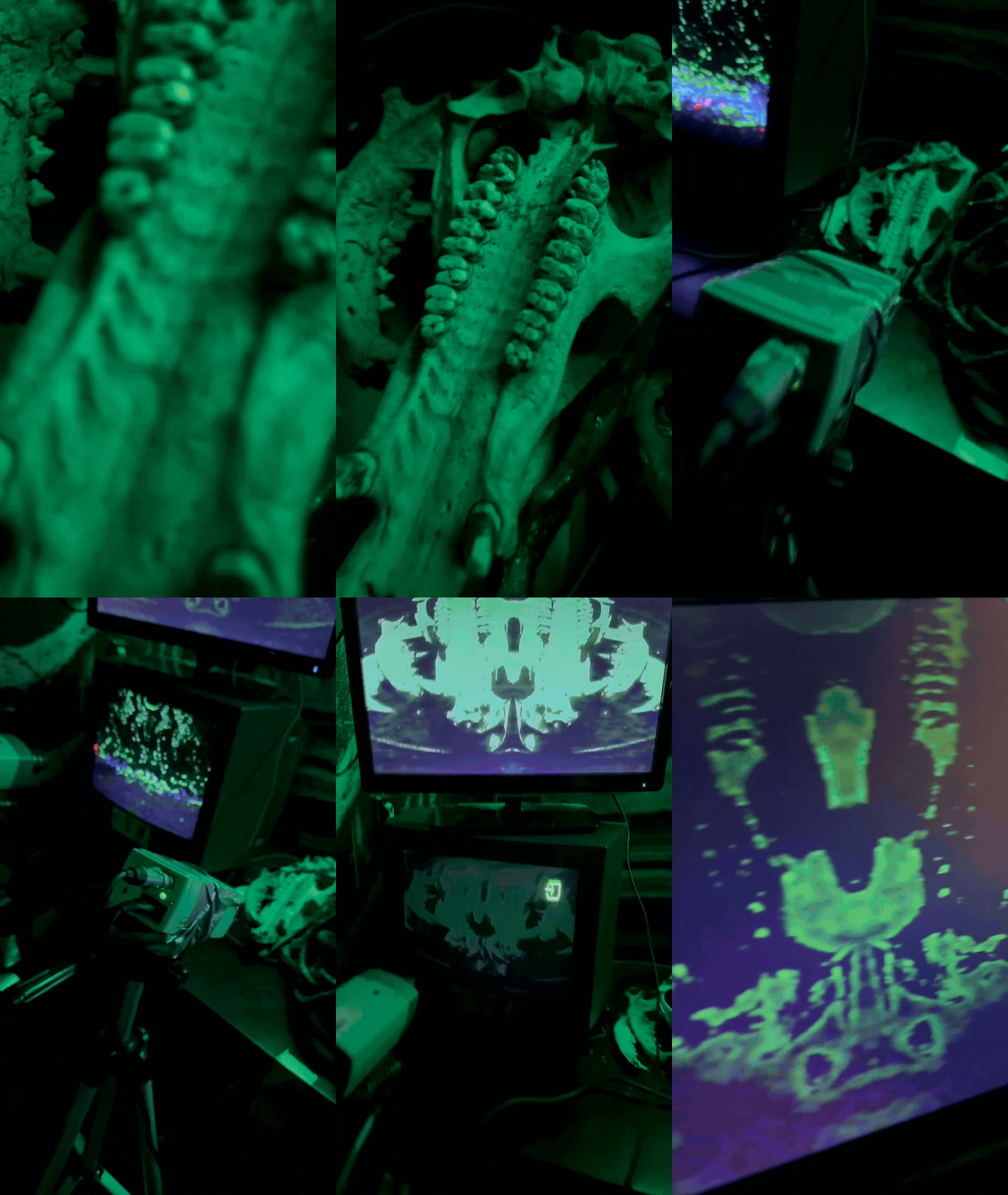
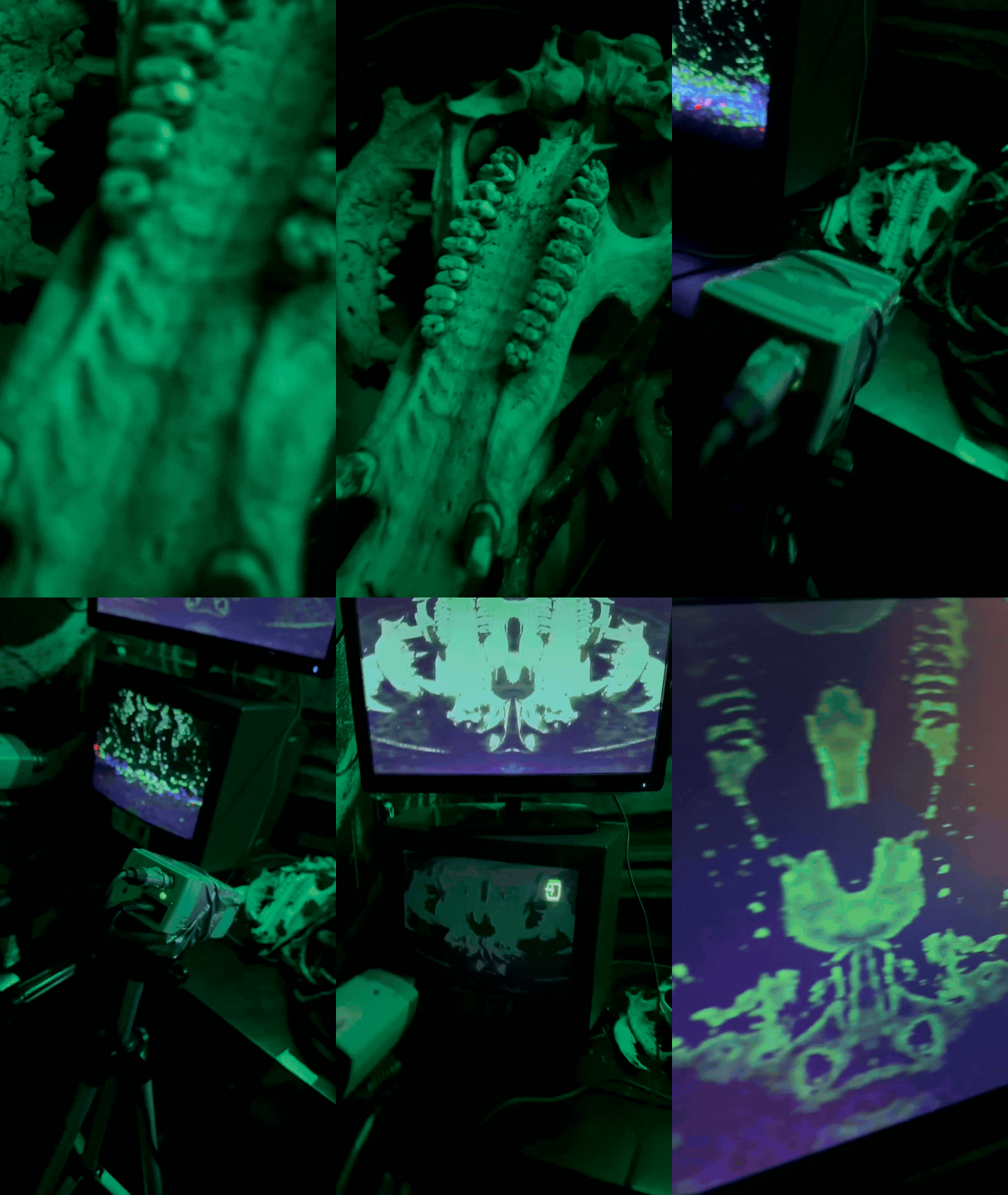
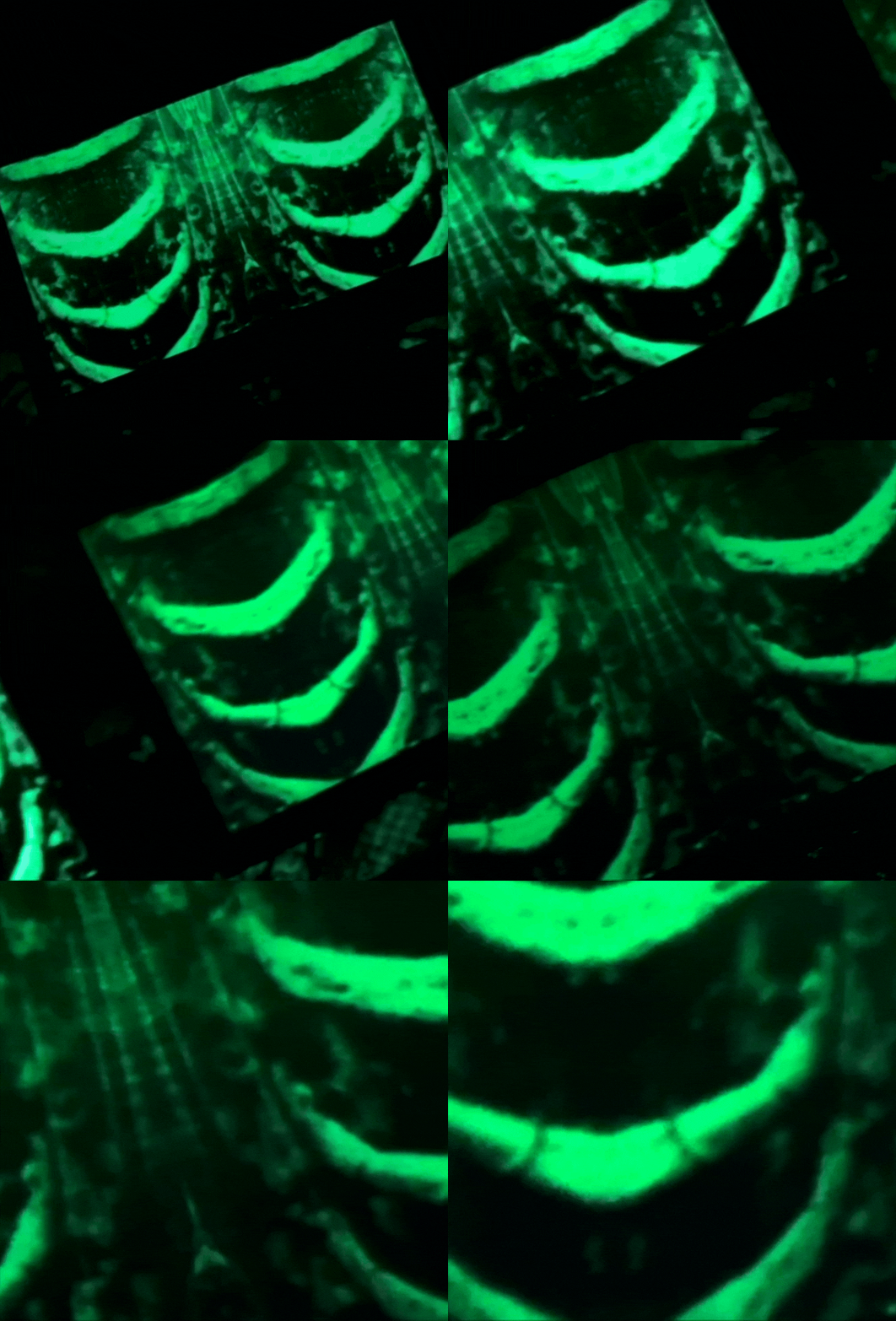
In this experiment, we worked with a closed-circuit setup, using an animal skull as the origin point to generate signal. Instead of precisely controlling the image, we allowed the system to breathe on its own—to feed back into itself and distort autonomously. Through video feedback and analog glitch, unexpected patterns began to emerge: stains reminiscent of Rorschach tests, organic symmetries that feel alive, born directly from noise and instability.
The image is not constructed—it is revealed. It exists as a tension between the physical and the electronic, where bone acts as a trigger and light becomes a material in constant transformation.
We used CCTV cameras, an Edirol V4 mixer, and a modified glitch device (Bent Archer Video Enhancer), non-commercial, developed as part of a ROTTEN FLESH prototype.
The results did not remain on screen: they were transferred onto skin, tattooed on DC Bacterio, turning these forms into a living archive where noise and distortion inhabit the body.
More than a technical process, this is a dialogue—between bone, light, and distortion. Where error is not corrected, but invoked.

⚙️NOISY TTT PROJECT⚙️
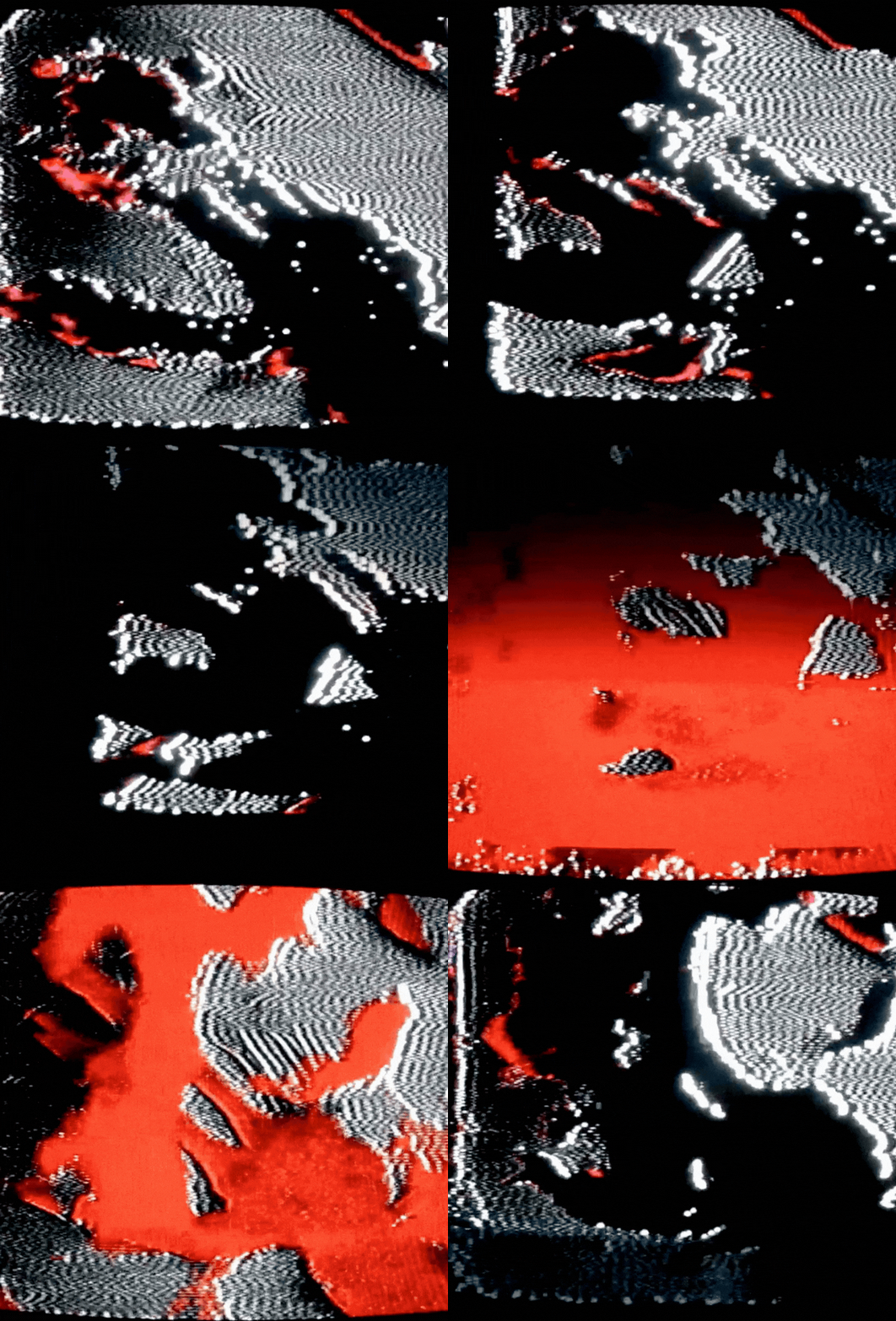
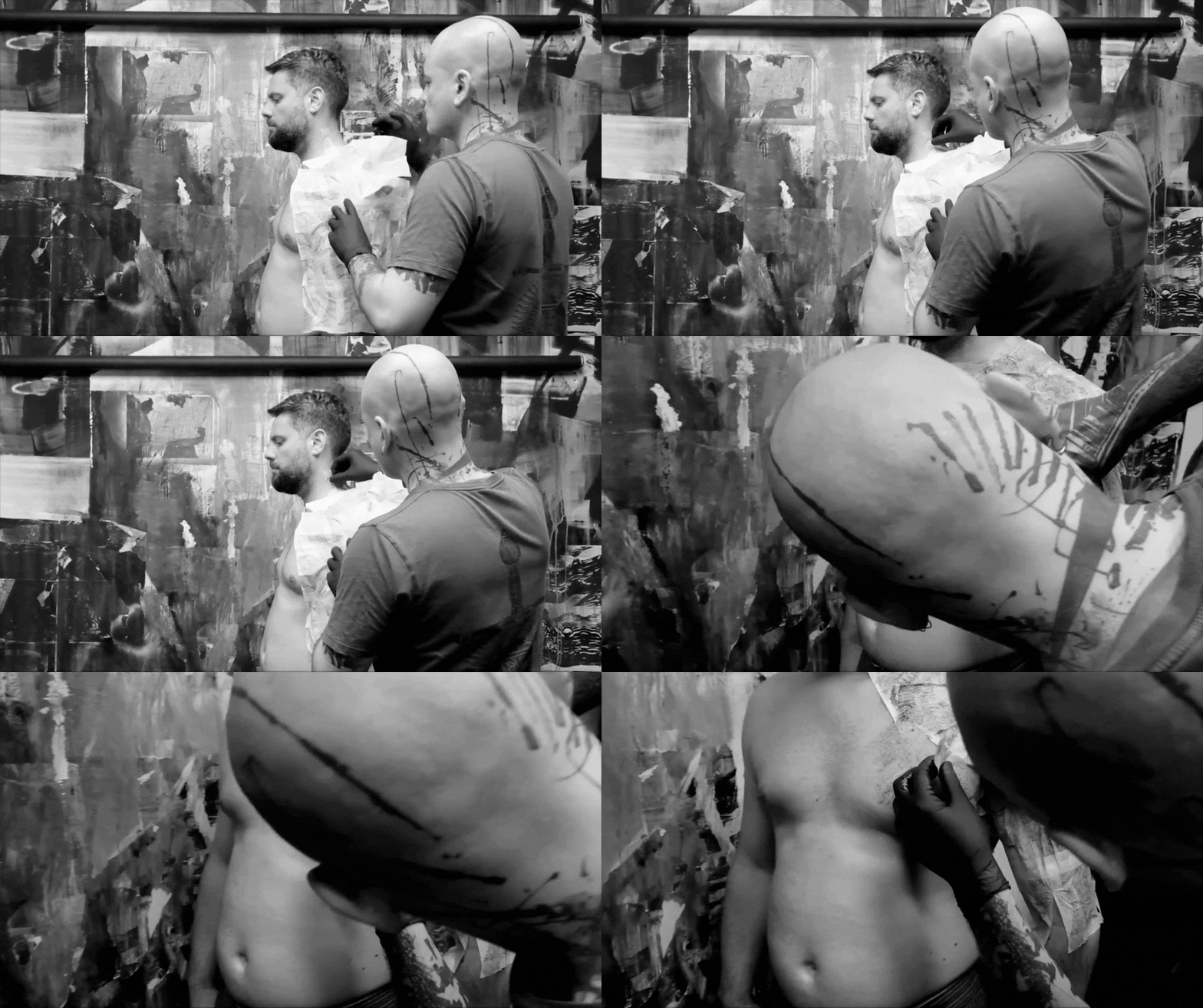
After some time working intensely alongside DC Bacterio, we managed to develop a chain of devices and a methodology capable of tattooing your own noise. This process is not about cleaning or organizing the signal, but the opposite: letting the system collapse, repeat itself, and distort until unexpected structures begin to emerge.
During the experiments, we managed to extract internal repetitions from the signal, as if the error itself was generating its own patterns. These repetitions are not clean or exact, but rhythmic mutations—visual echoes that keep returning, building almost automatic forms, as if noise had memory.
What you see here is a test, a small example of what can be achieved when the system is left partially uncontrolled. The result is not a single image, but a family of patterns derived from failure, interference, and continuous feedback.
DC Bacterio (@sptrng_brrkt), first “victim” of this new project, is also the creator of Wardrone, SignalSabotage and Shitv. Without him, none of this would have been possible. His tattoo is still in progress, as if the signal keeps writing itself onto the skin.
⚙️ UNABOMBERINDUSTRIES ⚙️

PROYECTO GENESIS
Genesis is a collaborative art project by Mocho and Emilio Cerezo
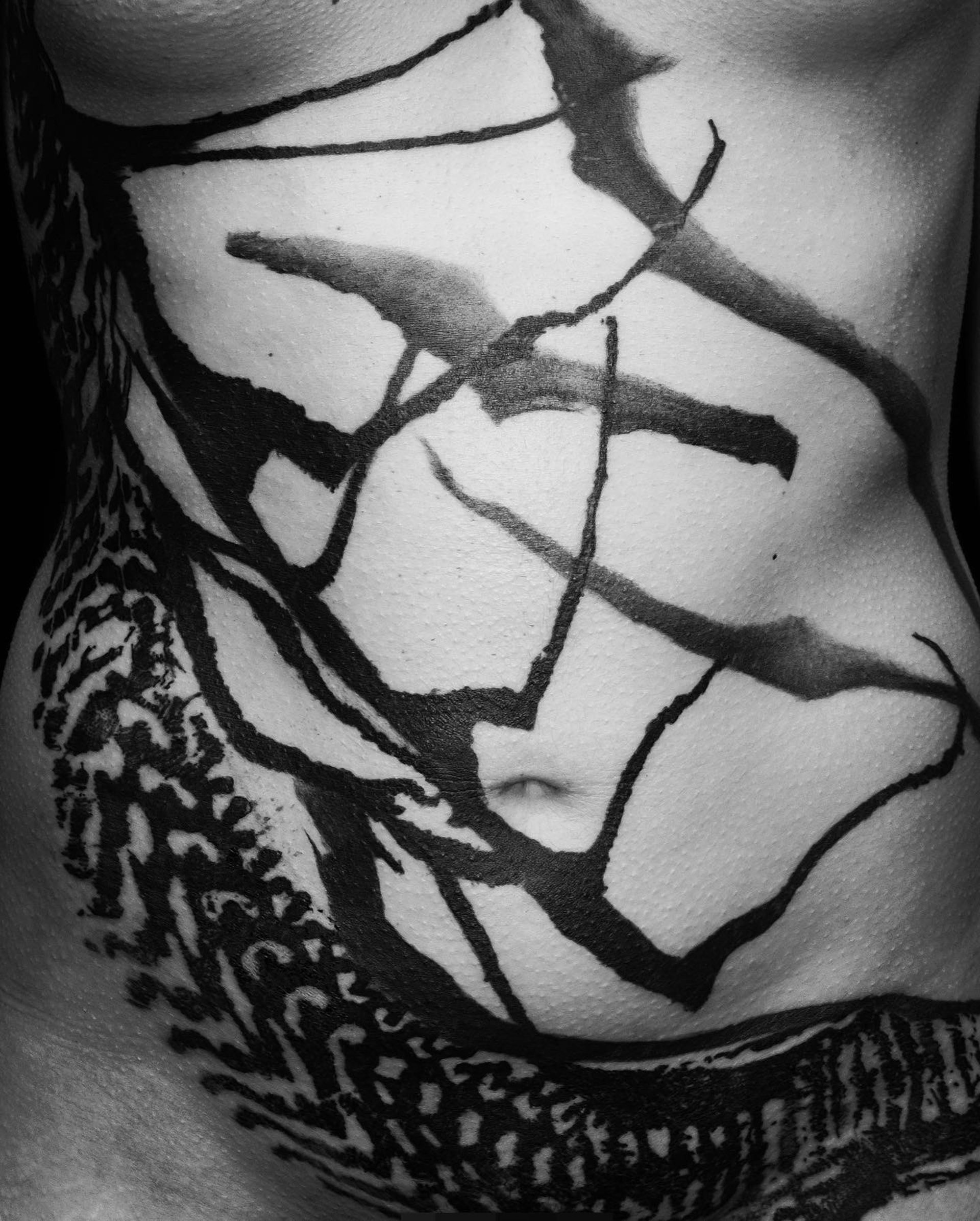
During the 2020 March lockdown we used a houseplant as a reference and starting point to create a series of pen drawings and collages that morphed into each other in sequence.
One of us would work on an image from home, and then send it to the other who would then continue to modify it, and little by little the plant began to blur, it changed into something different, from figurative to abstract.
Our artwork became the raw material we used to design a number of tattoos that always had the same graphic elements. Although forms and textures were repeated over and over again, the end result was a different composition for each body tattooed.

MOCHO.131+EMILIO CEREZO
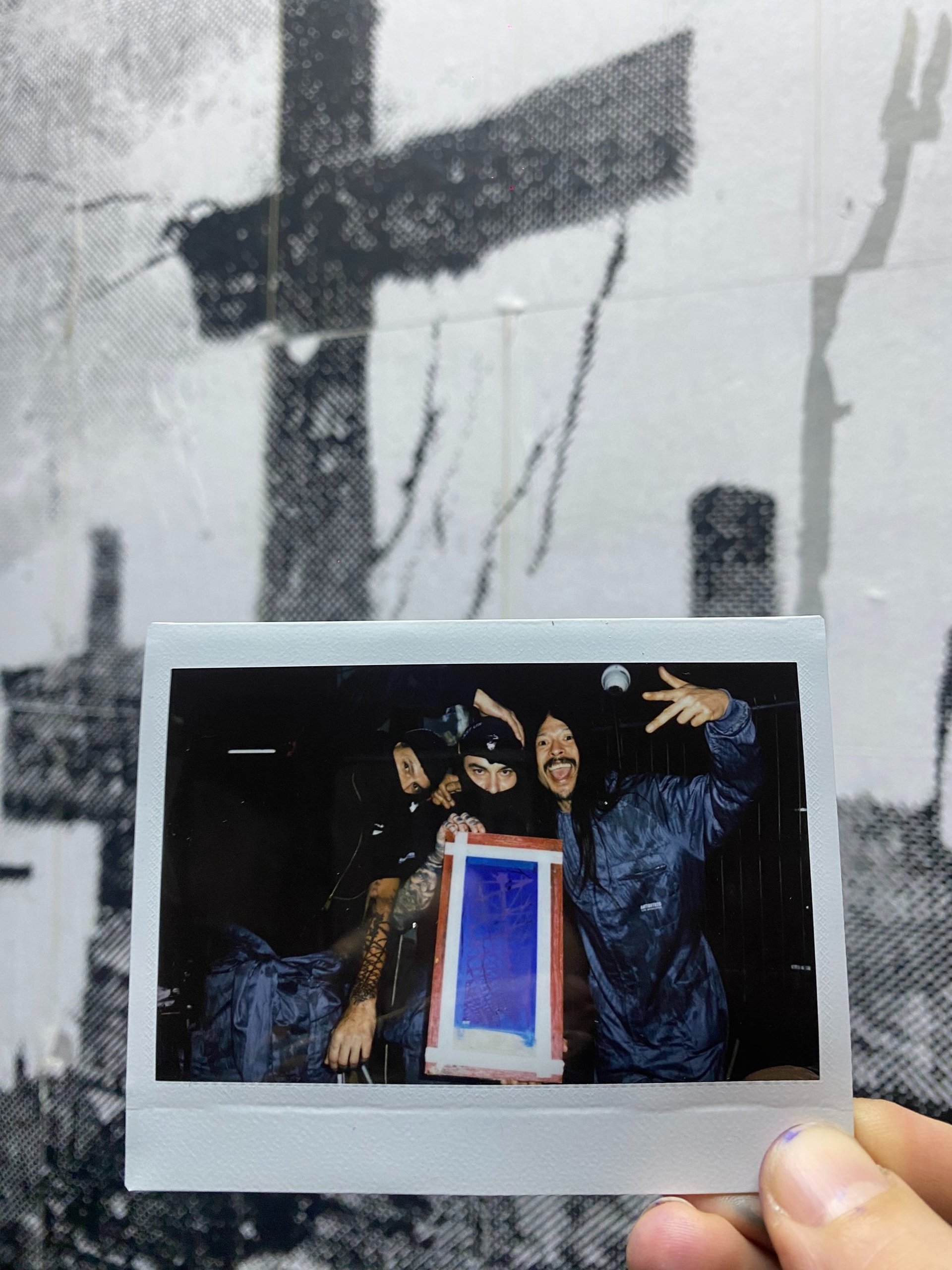

On the occasion of the launch of the new Antidoto28 collection at the Ombra music festival in Barcelona, held in a former car factory, artists Mocho 131, Chino Cob, and Nicenoise developed a multidisciplinary collaboration combining tattooing, screen printing, and audiovisual installation.
The concept consisted of transferring the design onto the skin using screen printing techniques, and then tattooing it during the festival. In this process, Mocho developed a special ink that allows the design to be screen printed directly onto the skin and used as a stencil for the tattoo, achieving a precise and direct transfer of the image.
The performance was set within an installation of analog television monitors displaying footage from security cameras, intervened in real time with glitch effects, creating the visual environment of the project.
The design is based on a photograph of the factory’s roof structure, which serves as the main visual for the Antidoto28 collection.
ORIGINAL IDEA:
NICENOISE + MOCHO.131
DATE:
12–2023
SCREENPRINTTT
BARCELONA 2020
SPINE GENERATOR 2020
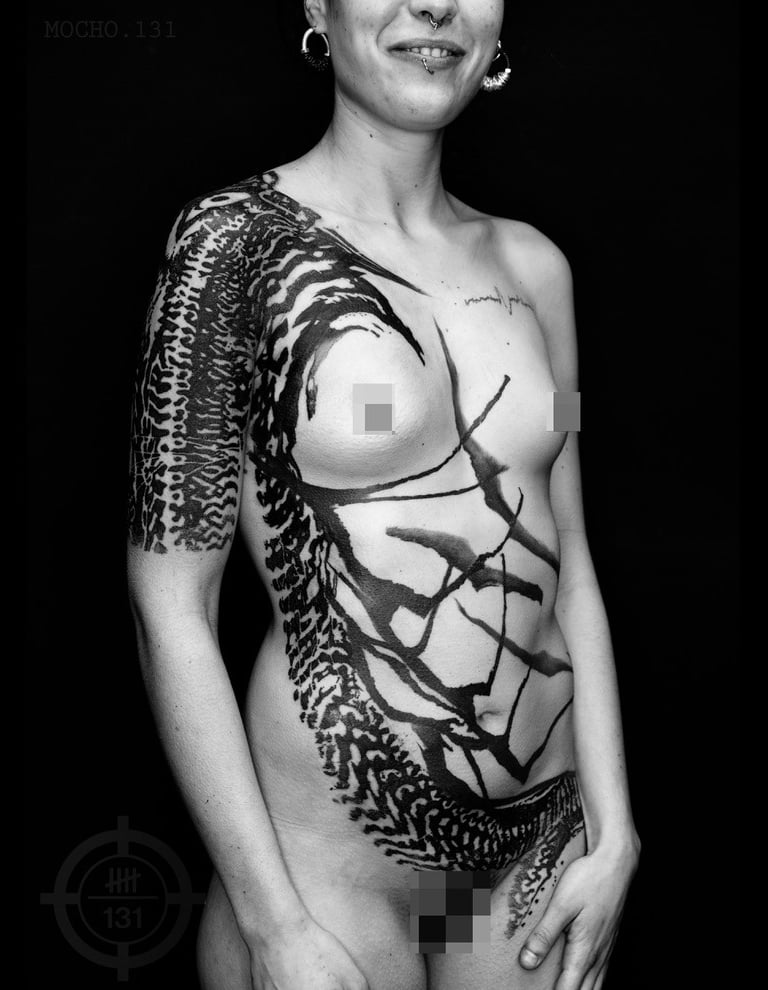
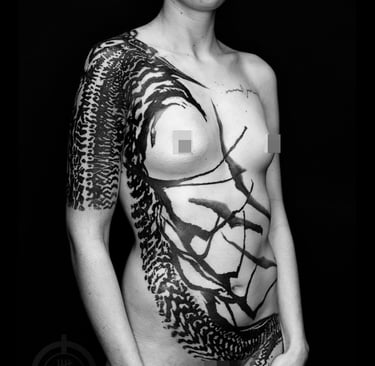
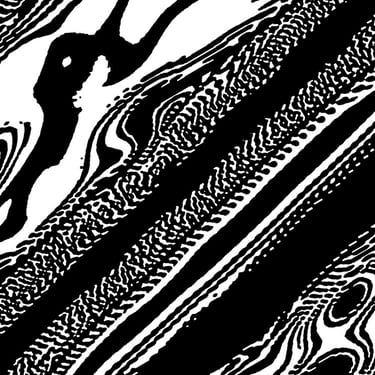
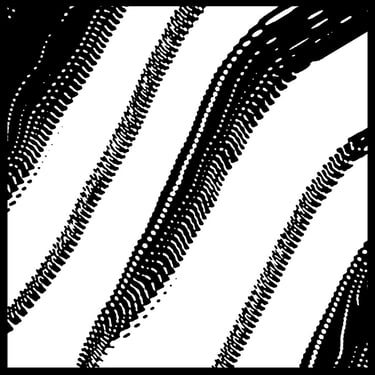
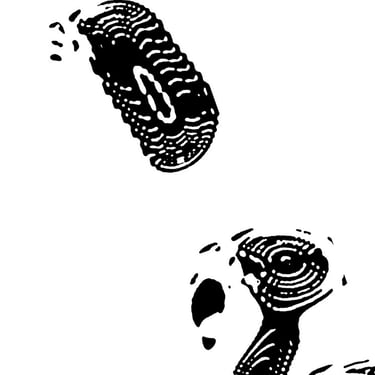
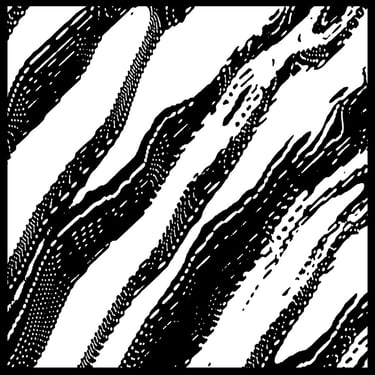
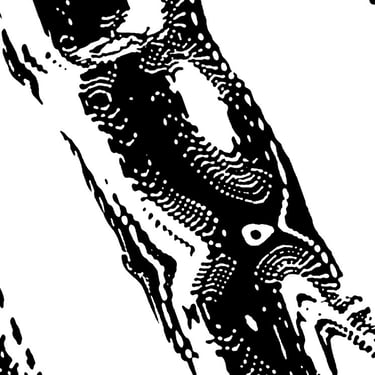
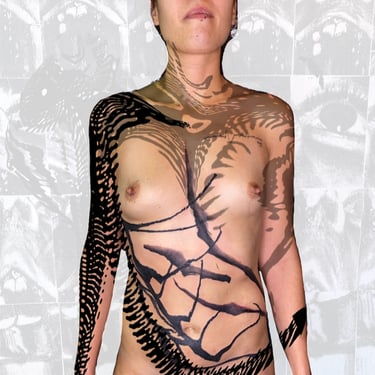
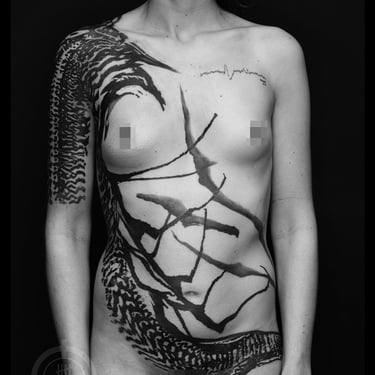
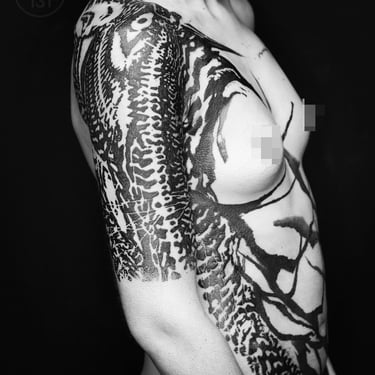
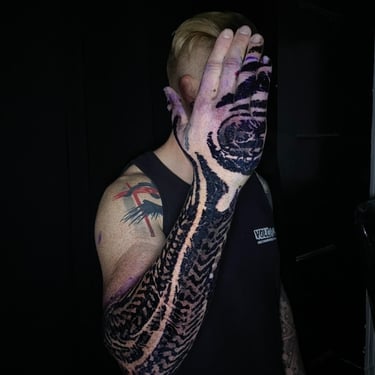
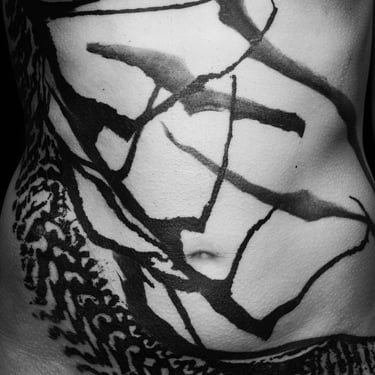
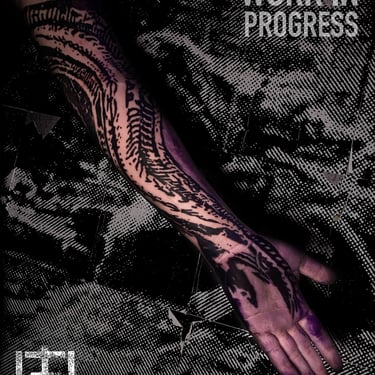
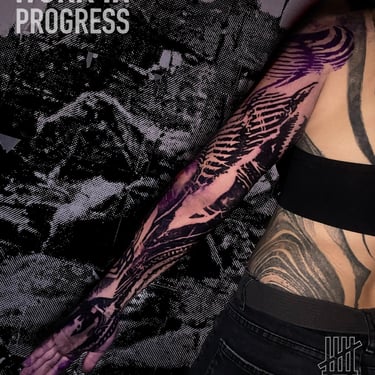
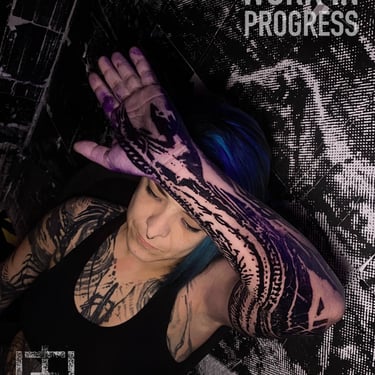
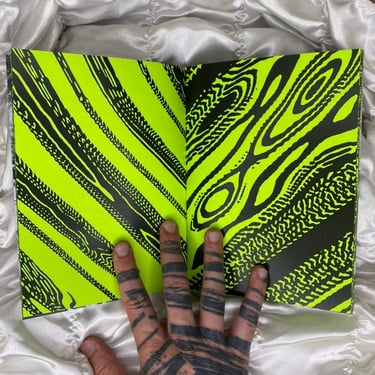
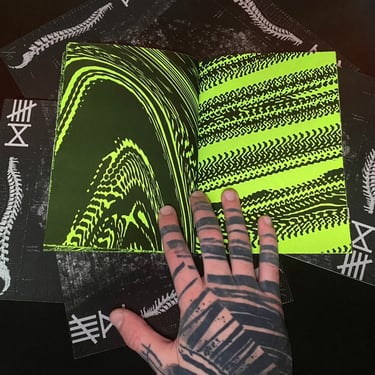
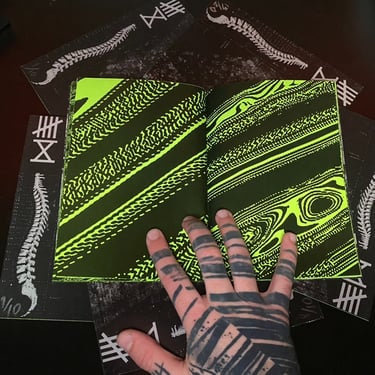
In 2020, I began a series of experiments using a scanner, not as a tool for reproduction, but as a device for transformation. Through distortion, movement, and the repetition of objects during the scanning process, forms began to emerge that escaped their original nature.
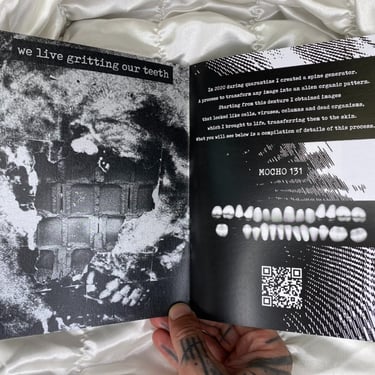
Starting from resin teeth—artificial, inert objects—I observed how the scanner would deconstruct and reconstruct them into images that resembled biological structures. What initially were dental fragments started to mutate into something else: impossible spinal columns, suggested soft tissues, organisms that seemed extracted from a microscopic environment or an alien biology.
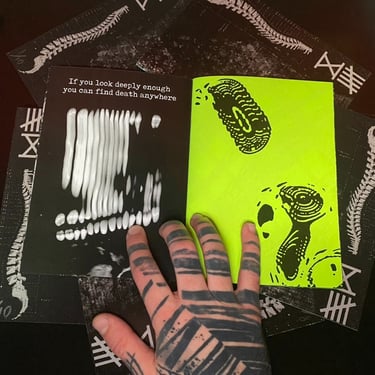
The resulting images evoked the sensation of looking through a microscope, as if these forms had always existed in a hidden layer, waiting to be revealed through a technical error or an altered reading of reality. They were not faithful representations, but hybrid interpretations between the organic and the artificial, the clinical and the strange.
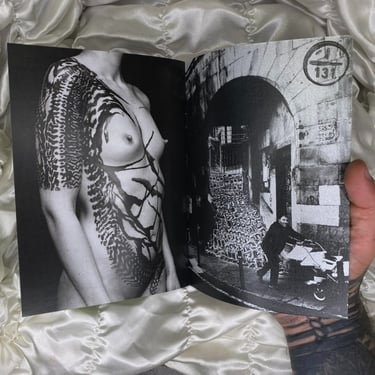
This process became a way of generating visual raw material. From these structures, I developed compositions that I later translated into tattoo work, bringing these “organisms” onto the skin. In this way, the human body became the next surface of mutation—a space where the artificial, the biological, and the imagined merge.
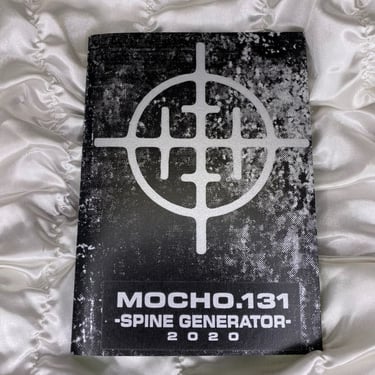
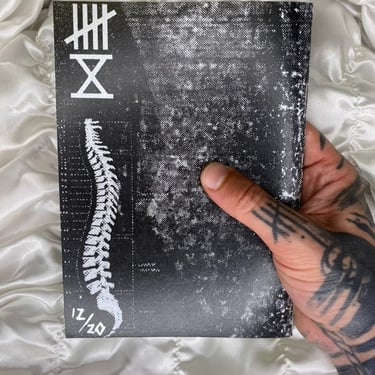
As an extension of this research, I produced a small publication titled SPINE GENERATOR, where I compiled part of these results. The zine functioned both as an archive and as an artifact—a container for these mutating forms, momentarily fixed before continuing their transition into other mediums.
Rather than documenting objects, the scanner operated as a catalyst for new forms of visual life, a tool to explore the limits between flesh, machine, and perception.
BARCELONA 2020
CERAMIC SEA
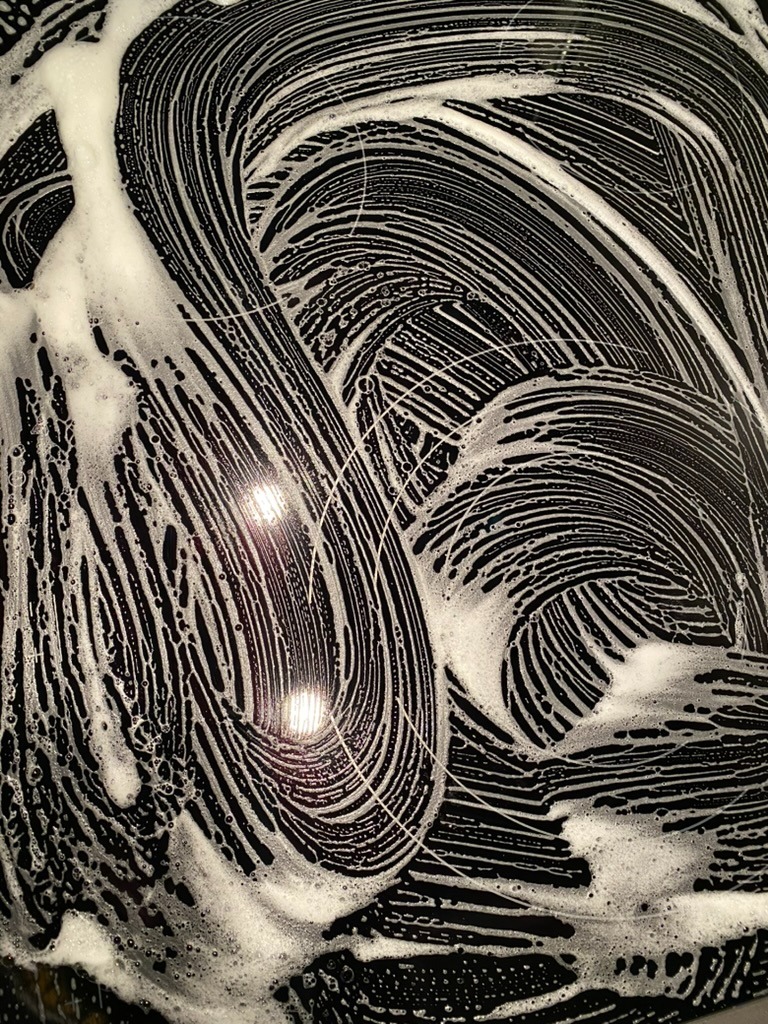
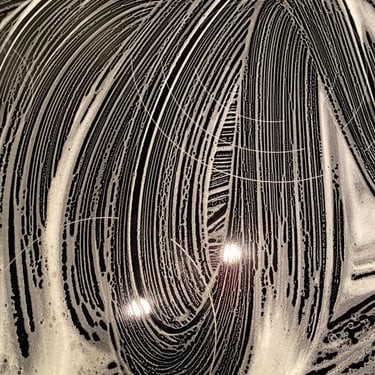
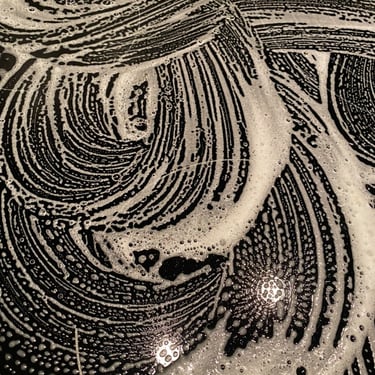
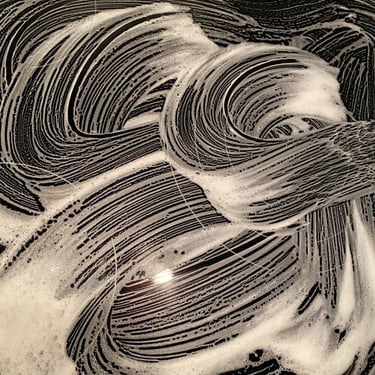
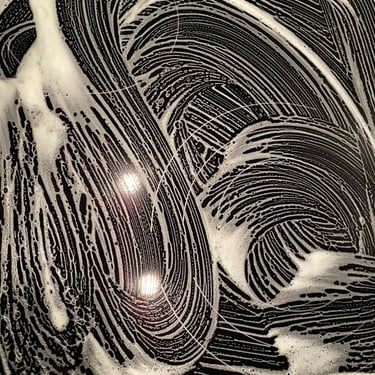
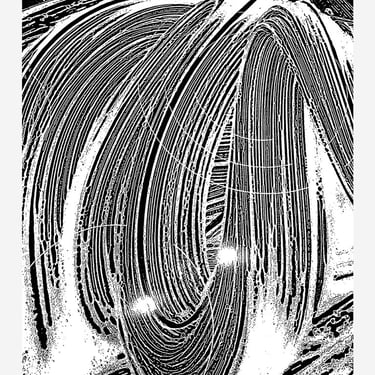
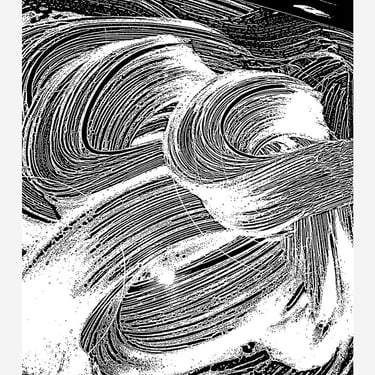
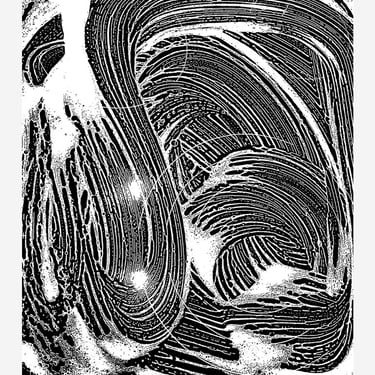
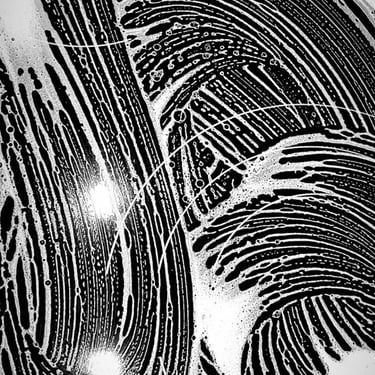
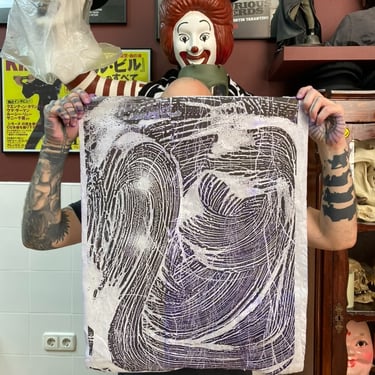
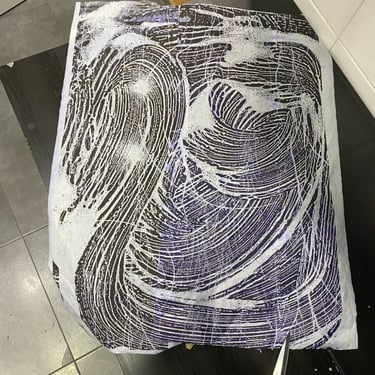
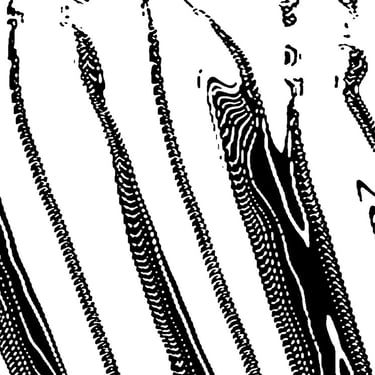
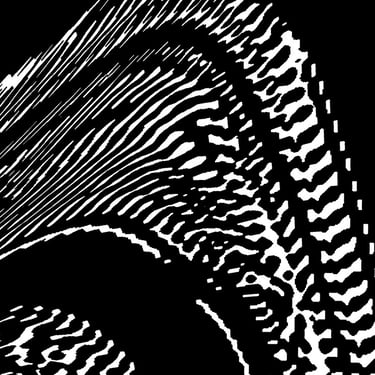
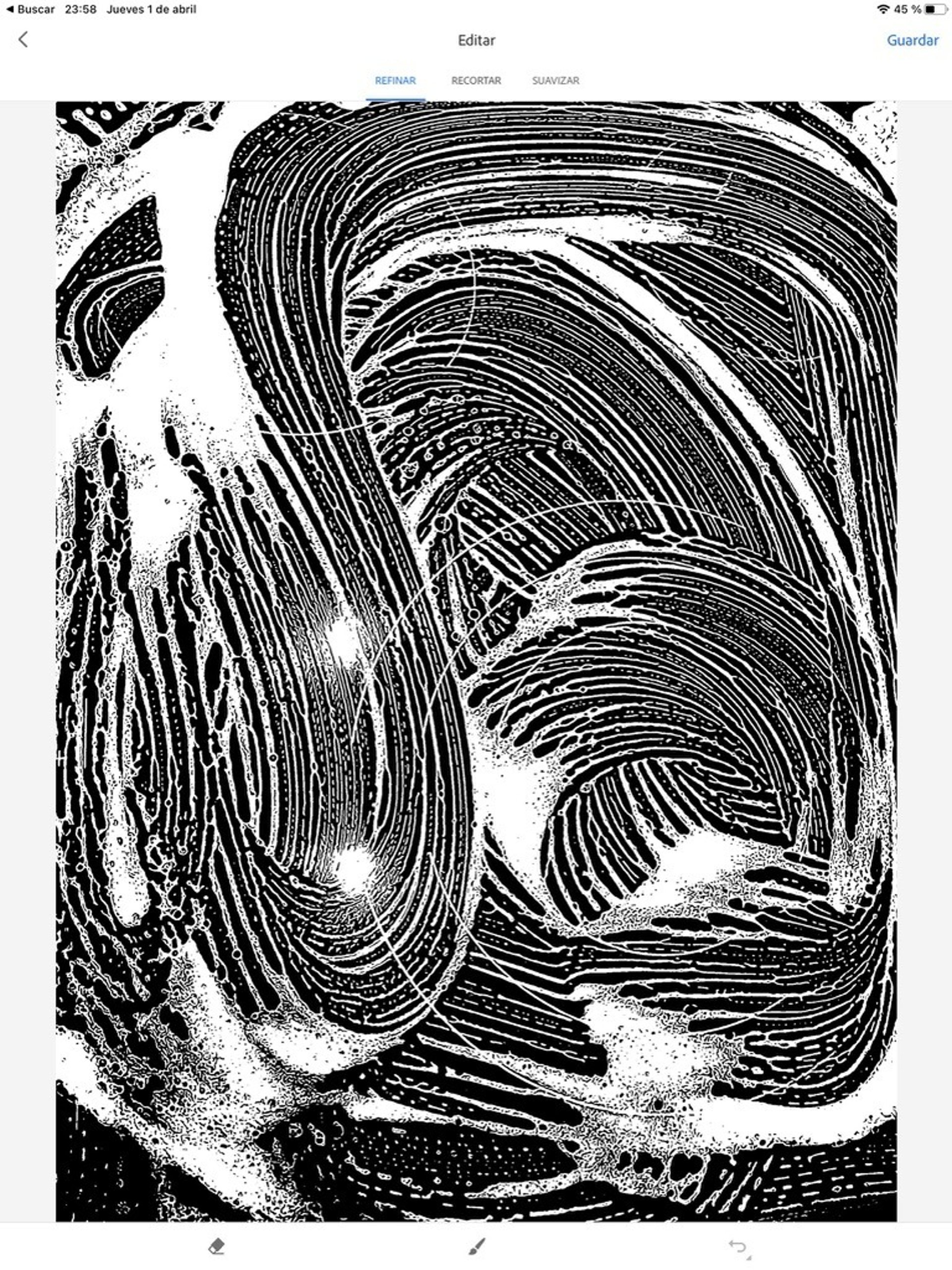
In this experiment, I focused on observing the forms left behind by foam on a glass-ceramic surface, shifting attention away from the object itself and toward the trace—toward what is usually considered ephemeral or irrelevant.
By spreading, moving, and letting the foam settle, patterns began to emerge that constantly recalled the behavior of water. The forms were never static: they curved, opened, and collapsed as if driven by an invisible current. Everything pointed to waves in transformation, to surfaces under tension, to a continuous motion that never fully stabilized.
At times, the surface seemed to become a contained sea, where small crests and swirling movements appeared and disappeared within seconds. These formations evoked both microscopic detail and expansive landscapes, creating an ambiguity between the minimal and the vast.
What became most compelling was their unstable nature. These “waves” could not be fixed—they continuously shifted, broke apart, and reformed. Each moment was unique and unrepeatable, making observation and documentation an attempt to freeze something inherently in motion.
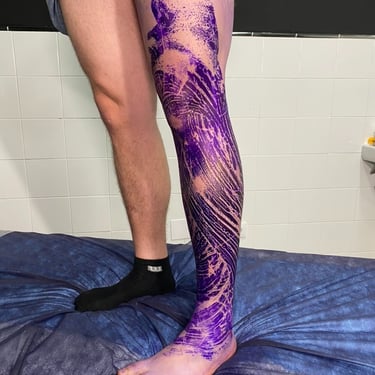
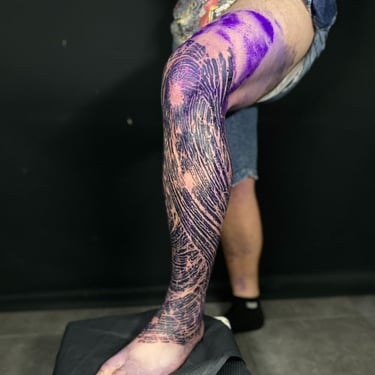
Through documentation, these structures were captured and held in time, transforming into images that retained a sense of flow and suspended energy. These images became raw material for the development of tattoo designs, translating this organic and ever-changing movement onto the skin.
What originally existed as domestic residue was redefined as a record of movement—a mapping of waves and tensions across a rigid surface, and ultimately as a permanent inscription on the body.
This experiment proposes a way of seeing in which even the most ordinary processes can contain complex dynamics, revealing patterns that connect the domestic with the organic, the minimal with the immense.